A dedicated R&D team develops new products and designs, explores new materials and collaborates with designers and manufacturing techniques.
S
STONIUM / 2027
Preparing the atlas.
Preloading the complete catalog experience…
 STONIUM / 2027 COLLECTION ATLAS
Concrete. Textures. Colors.
The material,
made legible.
A one-page interactive atlas for the Stonium 2027 collection. Search every model, move between collections, inspect verified dimensions and installation information, explore the Stonium palette, and jump directly to the WordPress media asset or technical document.
Stonium 2027
Six design languages
Enter by collection.
Every collection has its own visual grammar. Use the live filter for exploration, or open the real Stonium collection page for the complete WooCommerce catalogue.
Production
Innovation, precision, endurance.
The catalog's production story brings together R&D, proprietary modeling, in-house mold creation, heat performance, surface treatment and quality control. The six material-process stages below mirror the production and sustainability language used by Stonium.
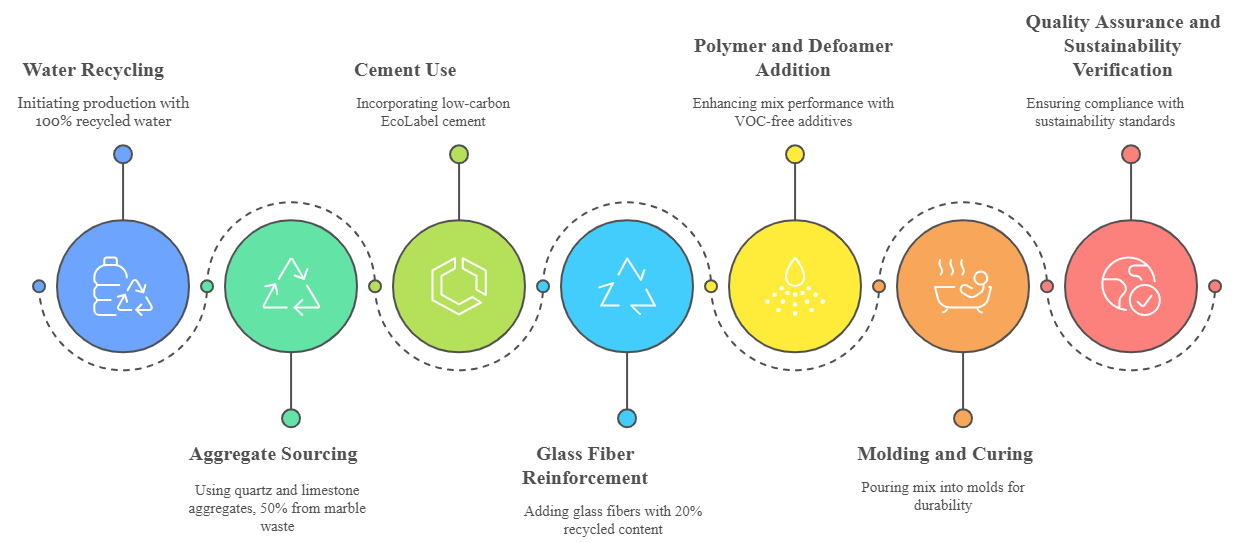 Material mix overview
Stonium describes a unique modeling process, precision sculpting, expressive design details and in-house mold creation to protect design integrity.
Fibers and polymers are described as structural additives supporting dimensional stability under extreme thermal conditions and daily hot-water exposure.
The catalog describes a breathable protective barrier, a silky matte surface and chemical resistance against bleach and cleaning agents.
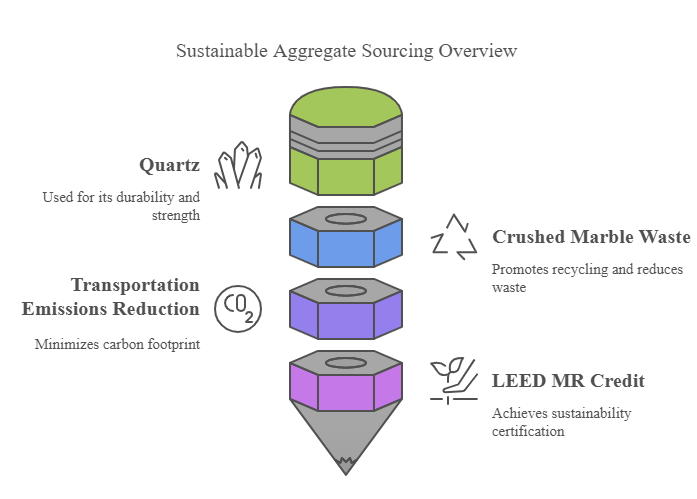
Aggregate sourcing
Quartz and limestone aggregates are selected for durability and lower environmental footprint, with repurposed crushed marble waste used in the mix.
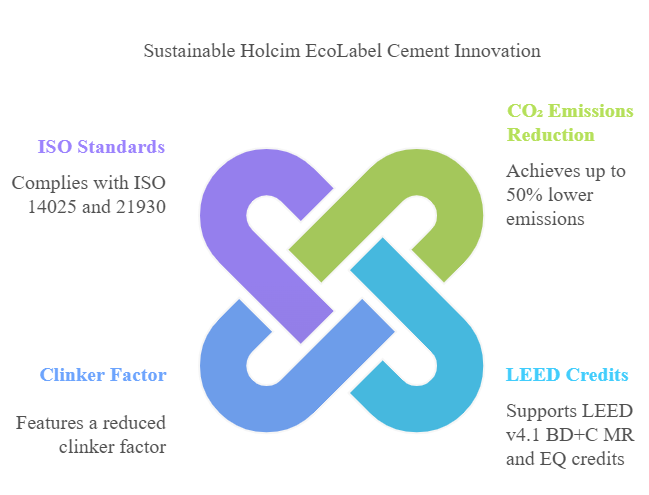
Low-carbon cement
The catalog specifies low-carbon, EcoLabel-certified cement and describes Holcim ECOPlanet as emitting less than half the carbon of conventional cement.
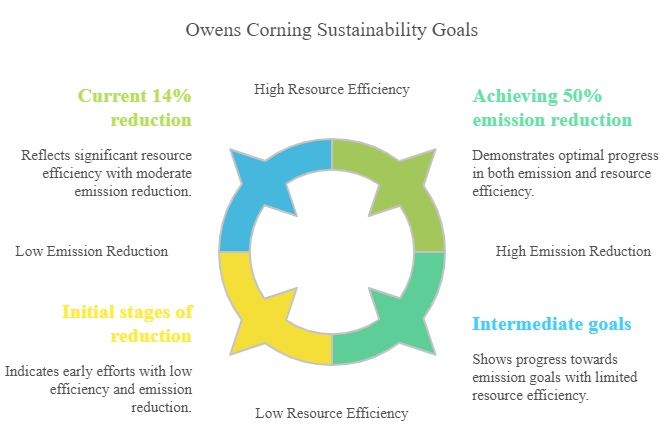
Glass fiber reinforcement
Glass fibers with 20% recycled content are described as improving structural strength and durability and supporting LEED and WELL criteria.
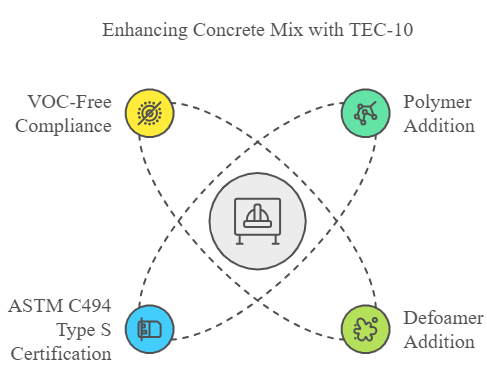
Polymer + defoamer
VOC-free polymers and defoamers improve concrete performance while reducing water demand, supporting indoor air quality.
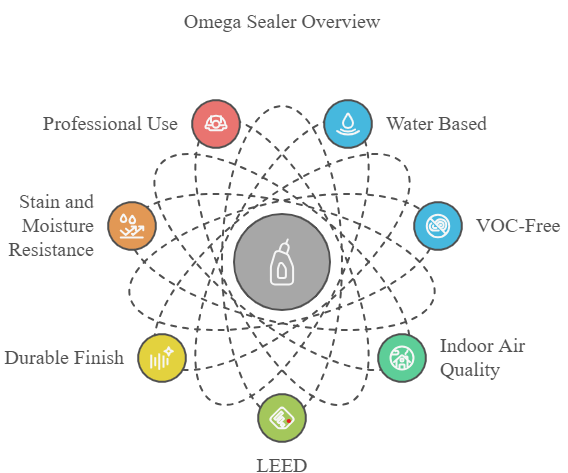
Water-based sealer
Each basin is finished with a water-based, VOC-free sealer intended to provide stain and moisture resistance without compromising indoor air quality.
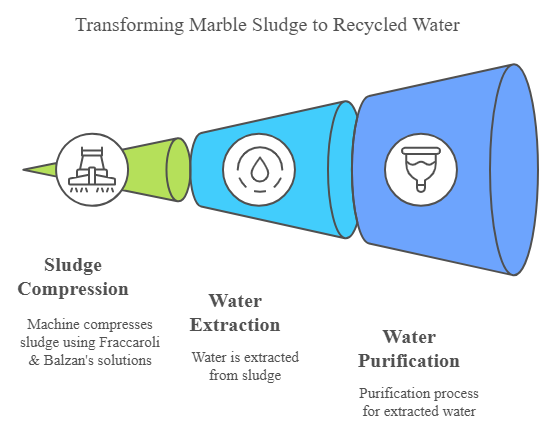
Closed-loop water
Production begins with recycled water from the marble facility; the catalog reports up to 98% water recovery and 85% sludge dehydration.
Sustainability practices
Responsibility engineered into the mix.
Stonium's catalog presents sustainability as part of material selection, resource efficiency and indoor-environment performance. These six cards preserve the catalog's named practices rather than adding unverified claims.
01 / Water recycling
100% recycled water is described through a closed-loop system from the marble facility, supporting LEED and WELL conservation targets.
02 / Aggregate sourcing
Up to 50% of aggregate mix is repurposed from crushed marble waste, with local sourcing to reduce transportation emissions.
03 / Cement use
Low-carbon, EcoLabel-certified cement is specified; the catalog describes ECOPlanet as having less than half the carbon of conventional cement.
04 / Glass fiber
Glass fibers with 20% recycled content are used for structural strength and durability and are described as aligned with LEED and WELL criteria.
05 / Polymer + defoamer
VOC-free additives are described as improving concrete performance while reducing water demand and supporting better indoor air quality.
06 / Sealer application
A water-based, VOC-free sealer is described as providing stain and moisture resistance for enclosed residential and commercial environments.
ISO 14001GREENGUARD GoldLEEDWELLASTMEcoLabel
Technical data sheet
Measured performance.
These figures are transcribed from the 2027 technical data sheet and its referenced laboratory testing. They are catalog-reported values, not independent claims made by this interface.
Material compositionComposite material · binder · crushed stone · quartz
Surface finishMolded · patterned · filled · sanded · sealed
Density2,384 kg/m³
Compressive strength60 MPa (8,702 psi) · ASTM C170
Tensile strength70 MPa (10,152 psi) · ASTM D638
Flexural strength12.6 MPa (1,827.4 psi) · ASTM C880
Tensile modulus7,000 MPa · ASTM D638
Impact resistance20 J/M · ASTM D256
Surface hardness80 Shore D · ASTM D2240
Abrasion resistance0.25 mm (0.01 in) loss after 1,000 revolutions
Elongation at break5%
Water absorption0.4% by weight · ASTM C97
UV resistance500-hour UVA-340 exposure; catalog reports no crazing, chalking, cracking/blistering or color change
Surface mold growthASTM D3273 · Aspergillus niger · 4-week test; catalog reports Stonium composite results higher than the control in later weeks
Indoor air / LEED v4Catalog reports TVOC, benzene and formaldehyde results within stated LEED v4 limits
Quality systemISO 9001 — consistent quality, efficient processes, continuous improvement and customer focus
Important: laboratory and certification statements above are reproduced as catalog-reported information. The 2027 technical sheet identifies reports from AUB — American University of Beirut Laboratories and MLABS Dubai and references ASTM methods.
Material intelligence
Built beyond the surface.
The catalog describes Stonium as 100% concrete using its signature blend, with consistent supply, quality and color. Production information includes in-house mold creation, a proprietary modeling process, near-zero absorption, 60 MPa compressive strength, minimal abrasion, fiber/polymer reinforcement, heat tolerance and advanced surface treatment.
Everything in the catalog is presented as concrete and part of the Stonium signature blend.
Catalog production material states an impressive 60 MPa compressive strength.
The production section states that the formulation is designed to reject moisture and keep surfaces dry, clean and protected.
Fibers and polymers are described as supporting dimensional stability under extreme thermal conditions and daily hot-water exposure.
A breathable protective barrier and silky matte surface are described, with resistance to stains and cleaning chemicals.
Stonium states that molds are developed in-house to protect design integrity and creative freedom.
Beyond the basin
Everything the catalog says about the system.
Stonium’s 2027 catalog is not only a model list. It also documents production, surface engineering, drains and care. These facts are kept together here so the technical story is reachable without leaving the experience.
Stonium describes a dedicated R&D focus on new products, new designs, new materials and manufacturing techniques, with a proprietary modeling process and in-house mold creation.
The catalog describes precise sculpting, expressive curves and edges, and engineering intended to exceed laboratory standards for luxury architectural spaces.
The catalog includes Stonium pop-up drains designed to complement the washbasins in function, seamless integration and premium finish. Drain colors are organized across Earthtone, Pastel and Terrazzo families.
White · Beige BD · Brown WD · L-Grey · D-Grey · Black WD.
Flamingo · Terracotta · Peach · Banane · Mint · Smoke Blue · Azul.
Terra White · Terra Black.
Full catalog dossier
The information layer.
Beyond the 25 models, the 2027 catalog documents Stonium’s origin, production philosophy, sustainability program, testing, drains, care guidance and distribution contacts. Everything below is kept in the same atlas so architects, designers and other systems can reach the information without opening the PDF.
Stonium positions the basin as an architectural component that contributes tone, weight, balance and spatial identity—not merely a fixture that holds and drains water. Each form is developed to integrate quietly or take visual lead according to the project intent.
1965 family company begins with concrete mosaic tiles and marble; 2013 investment in advanced concrete technology in Russia and mold precision in the USA; 2014 Stonium launches concrete washbasins; 2016–2017 product line expands; 2020 concrete creations expand into shower trays, bathtubs and customized work; 2023 Dubai distribution facility opens.
Dedicated R&D explores new products, designs, materials and manufacturing techniques. The catalog highlights proprietary modeling, in-house mold creation, precision sculpting, near-zero absorption, 60 MPa compressive strength, minimal abrasion, fiber/polymer reinforcement, heat tolerance and advanced surface treatment.
Closed-loop production uses 100% recycled water from the marble facility, with up to 98% water recovery and 85% sludge dehydration. Up to 50% of aggregate mix is repurposed crushed marble waste. The catalog also describes low-carbon EcoPlanet cement, 20% recycled-content glass fibers, VOC-free polymers/defoamers and water-based VOC-free sealer. It references ISO 14001, GREENGUARD Gold and LEED credits.
2027 technical data lists 2,384 kg/m³ density; 60 MPa compressive strength; 70 MPa tensile strength; 12.6 MPa flexural strength; 7,000 MPa tensile modulus; 20 J/M impact resistance; 80 Shore D surface hardness; 0.25 mm abrasion loss after 1,000 revolutions; 5% elongation at break; and 0.4% water absorption.
The catalog includes LEED v4 TVOC testing with reported results below stated detection/limit values, UV exposure testing under ASTM G154-16 with no crazing, chalking, cracking/blistering or color change observed, and surface mold-growth testing under ASTM D3273. These are catalog-reported test results.
The catalog associates ISO 9001 with consistent quality, efficient documented processes, continuous improvement and customer focus—covering product/service requirements, operational clarity and ongoing improvement of customer satisfaction.
Stonium’s pop-up drain is presented as a functional and visual complement to the washbasins, with seamless integration and premium finish. Families include Earthtone, Pastel and Terrazzo drain colors.
Factory: Nabil Rizk & Sons S.A.R.L., Industrial Zone – Zouk Mosbeh, Lebanon. Dubai Distribution Centre: NovaKast LLC, Industrial Area – Al Qusais, Dubai, UAE. The catalog lists sales@stonium.com and the Stonium social handles shown in the publication.
Inspirational moment
Six color stories from the catalog.
Biophilic greenery, terrazzo, chrome and Peach create a warm, rhythmic composition where fluted texture catches the light.
Glossy white tile, warm oak and polished chrome form a clean backdrop; Azul introduces a cool coastal note.
Dark wood, matte black fixtures and deep marble are energized by Banane, controlled yellow accents and rich contrast.
Riven slate, brushed steel, raw wood and natural textiles are softened by Beige BD for a calm, refined atmosphere.
Dark plaster, deep red marble, ribbed textures and brushed bronze gain continuity through a Black WD basin.
Mother-of-pearl mosaics, concrete and ribbed oak are balanced by D-Grey between rough texture and refined surfaces.
Material compositionComposite material · binder · crushed stone · quartz
Surface finishMolded · patterned · filled · sanded · sealed
Compressive strength60 MPa (8,702 psi)
Tensile strength70 MPa (10,152 psi)
Flexural strength12.6 MPa (1,827.4 psi)
Water absorption0.4%
Color system
The Stonium palette.
The catalog separates the core range into Earthtone, Pastel and Terrazzo families. Model availability varies by collection; the interface therefore presents palette families without falsely assigning every finish to every model.
My Stonium Care Guide
Protect the surface. Preserve the finish.
The dedicated care section follows the 2027 catalog guidance: gentle cleaning, neutral products, continuous neutral-cure silicone and controlled exposure to heat and chemicals.
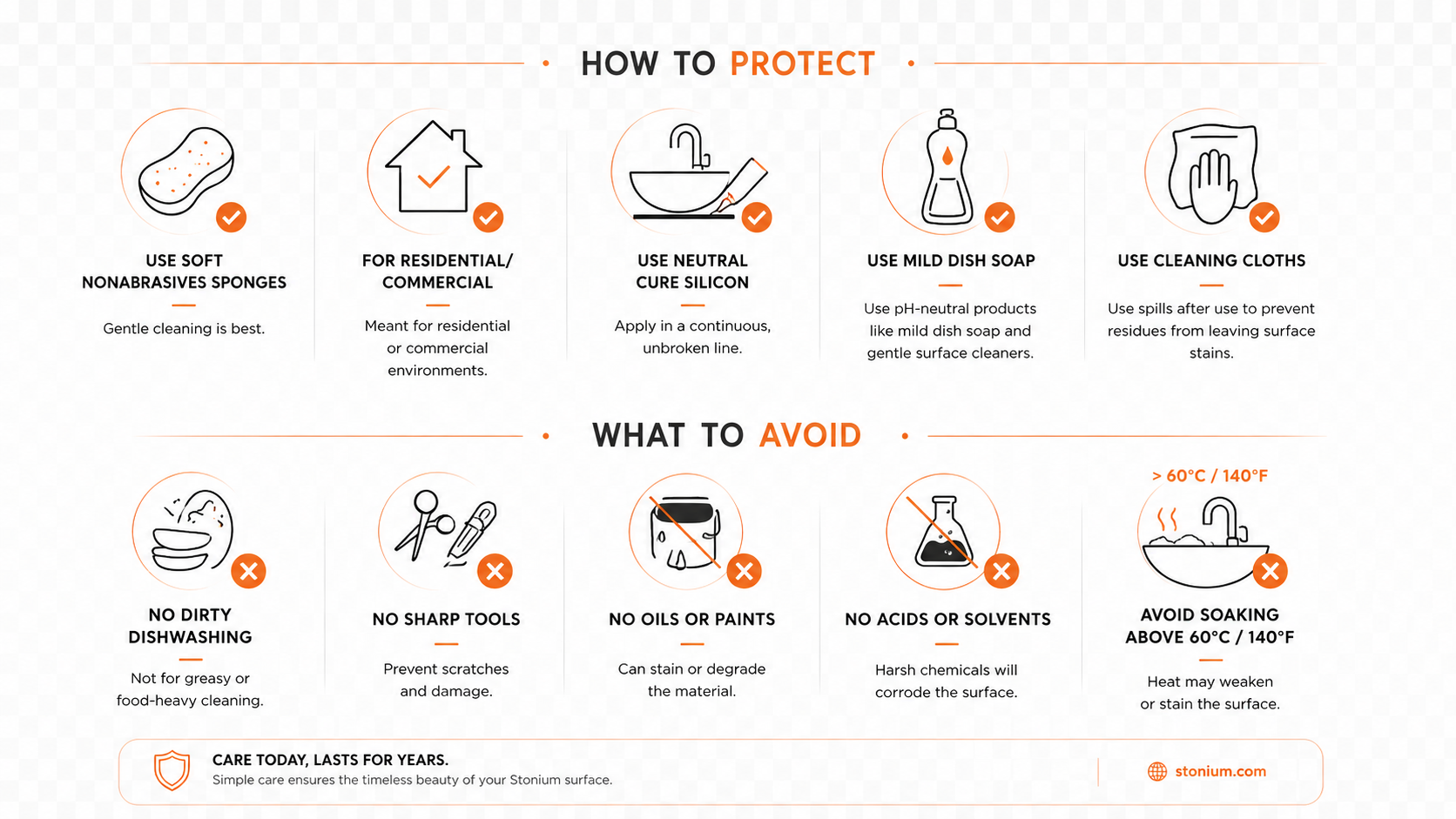
How to protect
Simple rules for long-lasting performance.
Stonium washbasins are crafted with premium materials designed to elevate spaces with elegance and durability. The catalog recommends soft, non-abrasive sponges, pH-neutral/mild dish soap, cleaning cloths and neutral-cure silicone applied in a continuous, unbroken line.
What to avoid
Do not use sharp tools, acids or solvents, oils or paints, or the basin for greasy/food-heavy dishwashing. Avoid soaking above 60°C / 140°F because heat may weaken or stain the surface.
Use soft non-abrasive sponges
Gentle cleaning is best.
Use mild dish soap
Use pH-neutral products such as mild dish soap and gentle surface cleaners.
Use cleaning cloths
Wipe spills after use to prevent residues from leaving surface stains.
Use neutral cure silicon
Apply in a continuous, unbroken line.
No sharp tools
Prevent scratches and damage.
No acids or solvents
Harsh chemicals will corrode the surface.
No oils or paints
Can stain or degrade the material.
Avoid soaking above 60°C / 140°F
Heat may weaken or stain the surface.
No dirty dishwashing
Not for greasy or food-heavy cleaning.